
Denial-to-Appeal Desk
Turns denial letters into structured records, groups them by root cause, and drafts appeals from the chart for a person to approve.
Every payer letter read into a denial record, each value from its line
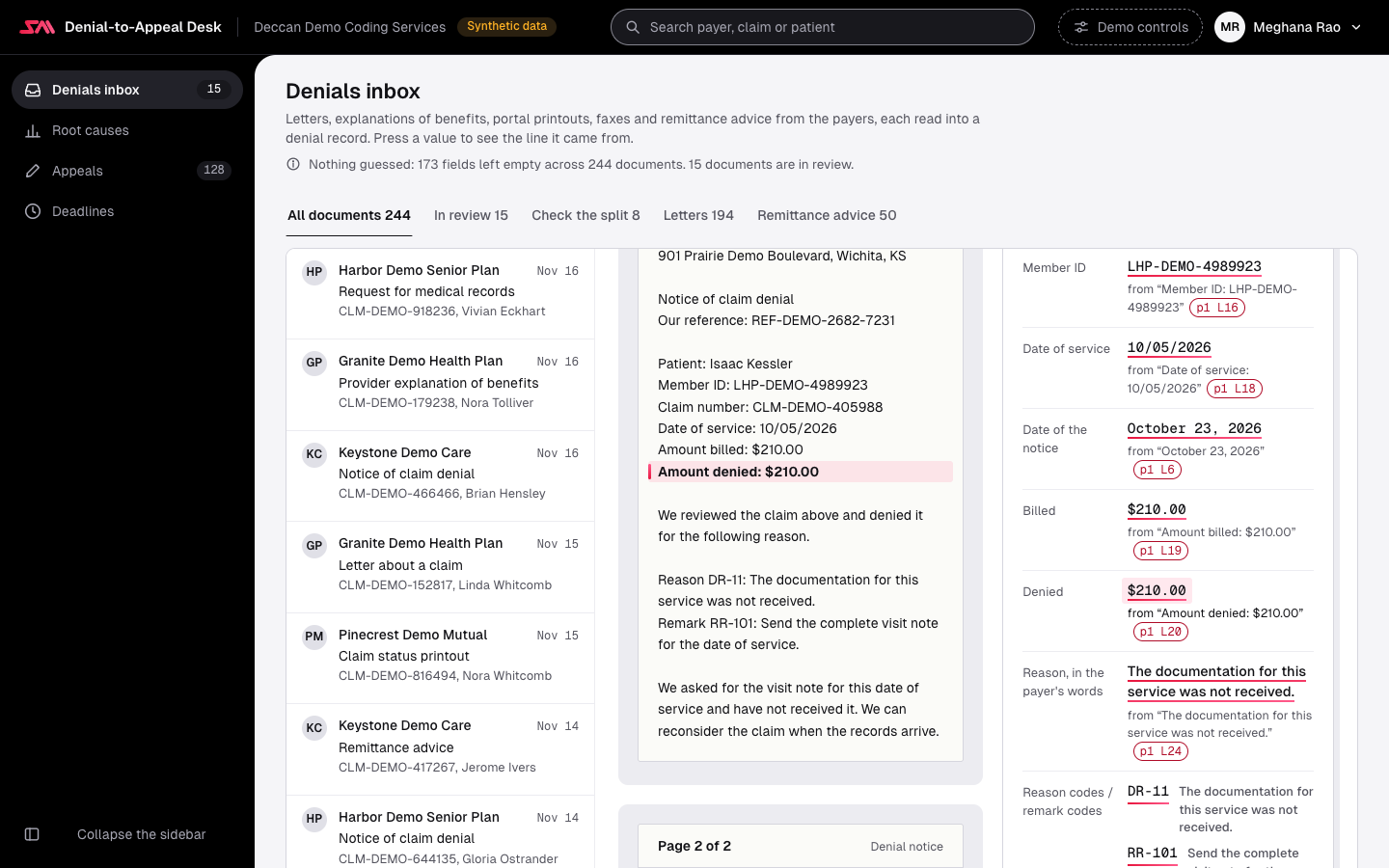 The real screen, on synthetic data
One PDF holding two claims becomes two records, both flagged for a check
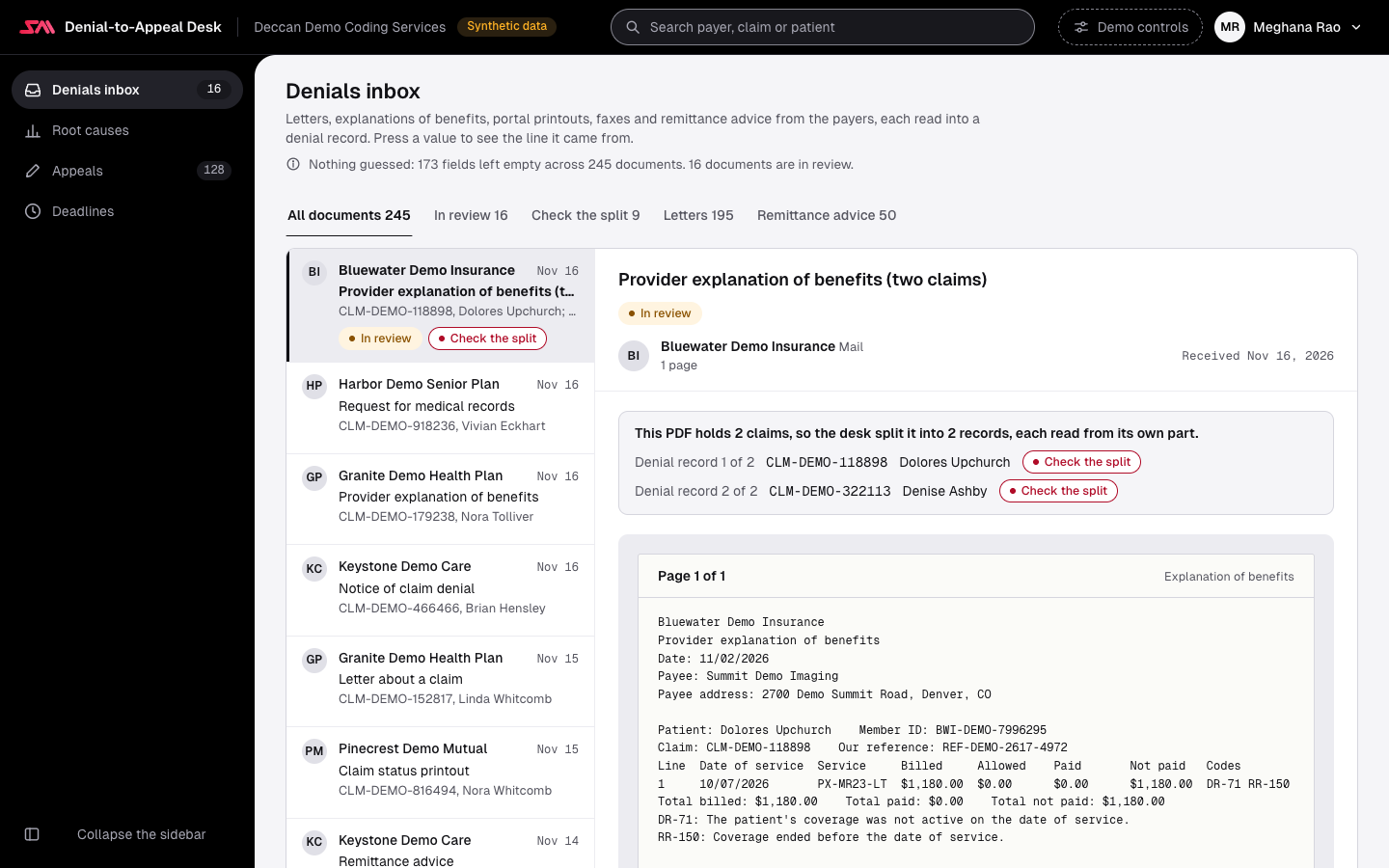 The real screen, on synthetic data
Denials grouped by reason and payer, so repeat causes show up
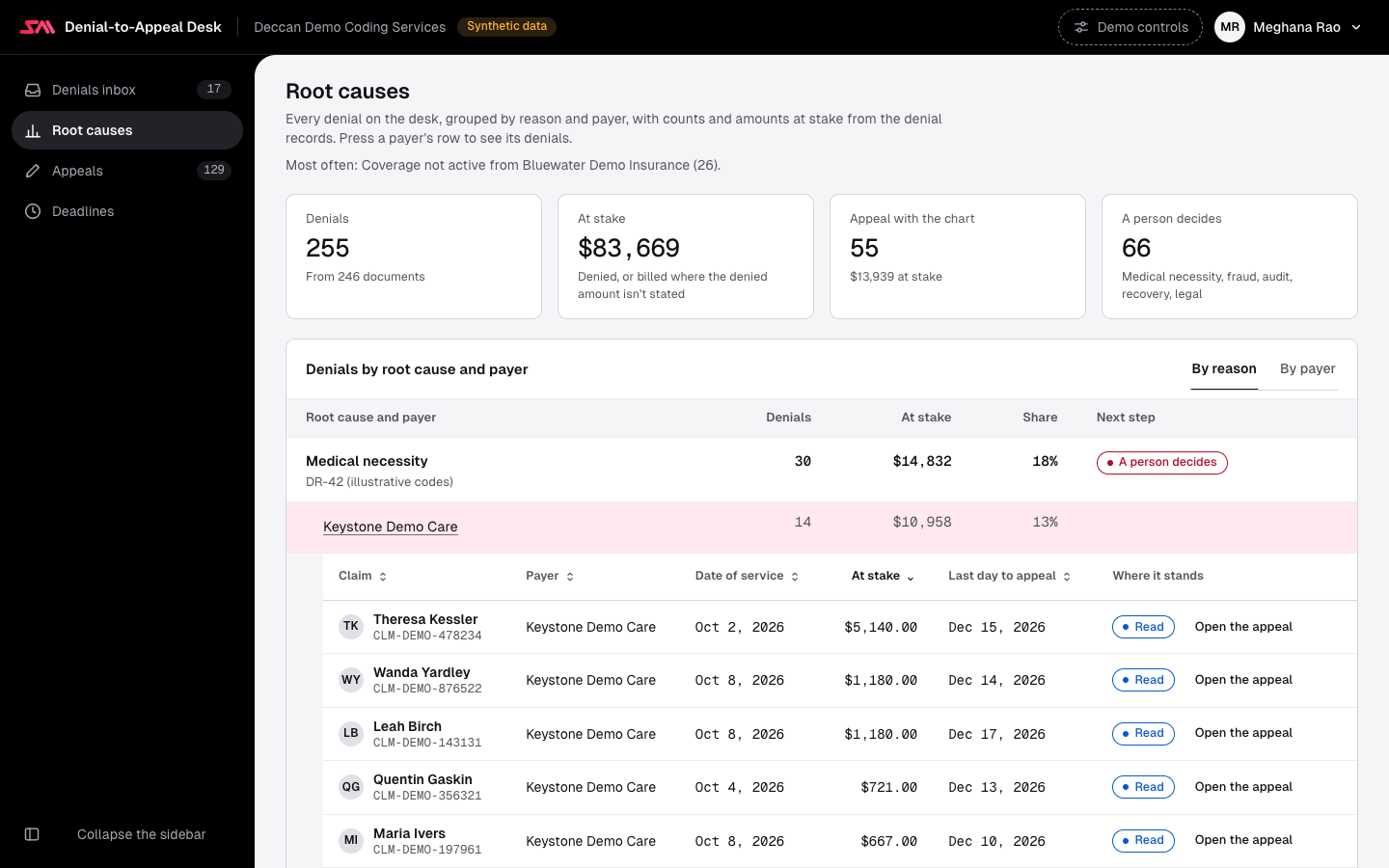 The real screen, on synthetic data
Appeals drafted from the chart, every sentence tied to a fact, for a person to approve
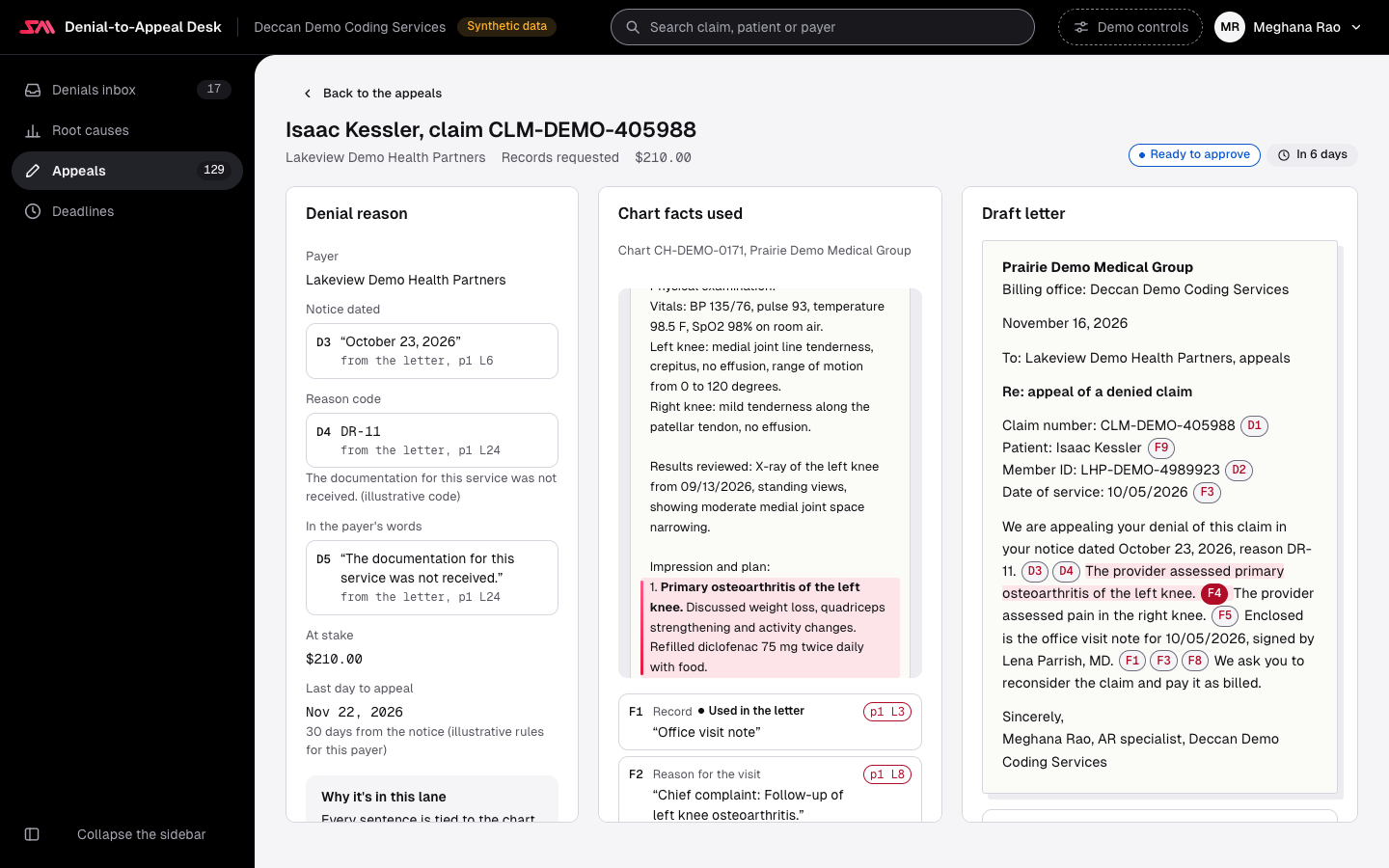 The real screen, on synthetic data
The whole demo as a video, with captions and chapters
Demo built on synthetic data.
1 of 5: A denial read
The problem
Denials arrive as scanned letters and remittance codes. Someone reads each one, keys it in and writes an appeal from scratch while the appeal window closes. The pattern behind the denials stays invisible because nobody has time to count them.
What it does
It reads denial letters and remittance remarks into a record — payer, claim, reason, dates, amount.
It groups denials by reason and payer so repeat causes show up.
It drafts each appeal from facts already in the chart and marks every fact it used.
It tracks each appeal deadline and moves urgent ones up.
Try to break it
On the call we'll trigger these, live:
- One PDF holds two claims. It's split, and both are flagged for a check.
- A fax is unreadable. It goes to a person with the unreadable pages marked.
- A payer portal is down. Appeals are held, and each is sent once on replay when it's back.
- An appeal is due in 48 hours. It moves to the top and goes to a senior.
Where it runs
Inside your network, next to Coding QA Copilot.
Who else does something like this
CombineHealth sells AI agents for revenue-cycle work, including denials and appeals.
Stafflo's version runs in your environment, cites only facts found in the chart, and sends nothing without a person's approval.
The rules it respects
Medical-necessity denials always go to a person. Appeals cite only what the chart says.
What our tests measured
How we testThese figures come from test runs on Google's Gemini (gemini-3.5-flash-lite), a hosted model, on synthetic data. We'll add runs on a local model.
- Run on 13 October 2026
- Model: gemini:gemini-3.5-flash-lite
- 314 examples
For your engineers
- Engines
- Extractor, Gatekeeper, Reconciler, Proof Console
- Sealed mode
- Test passed: with sealed mode on, it refuses every outbound connection except to the model you've approved.
Data flow