
Bench P&L Radar
Shows what each benched consultant is costing you by the day, and roughly when each is likely to be placed, so you can act before the month closes.
What the bench costs today, with the consultants it can't cost named
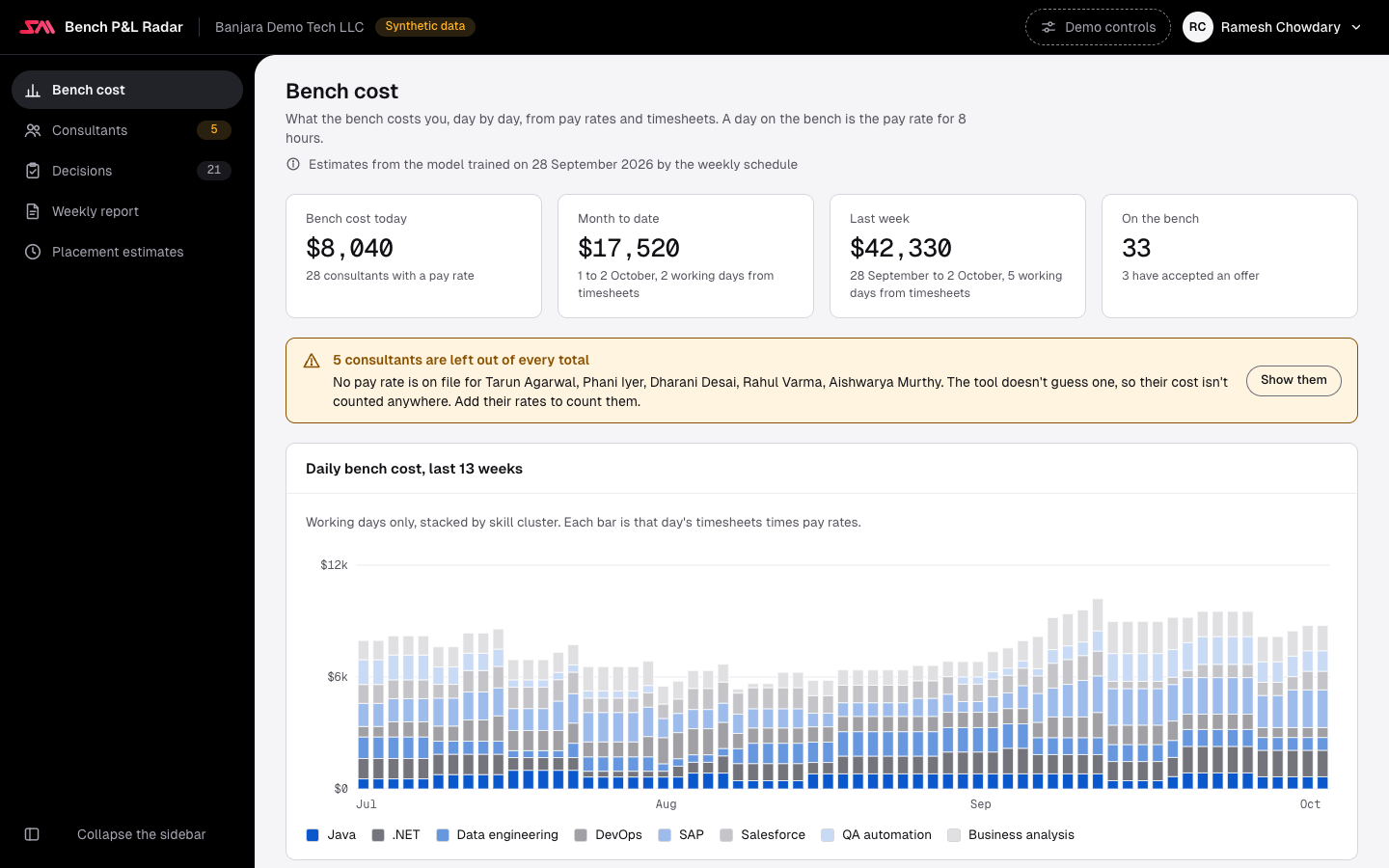 The real screen, on synthetic data
A consultant's cost to date, the placement window, and what drives it
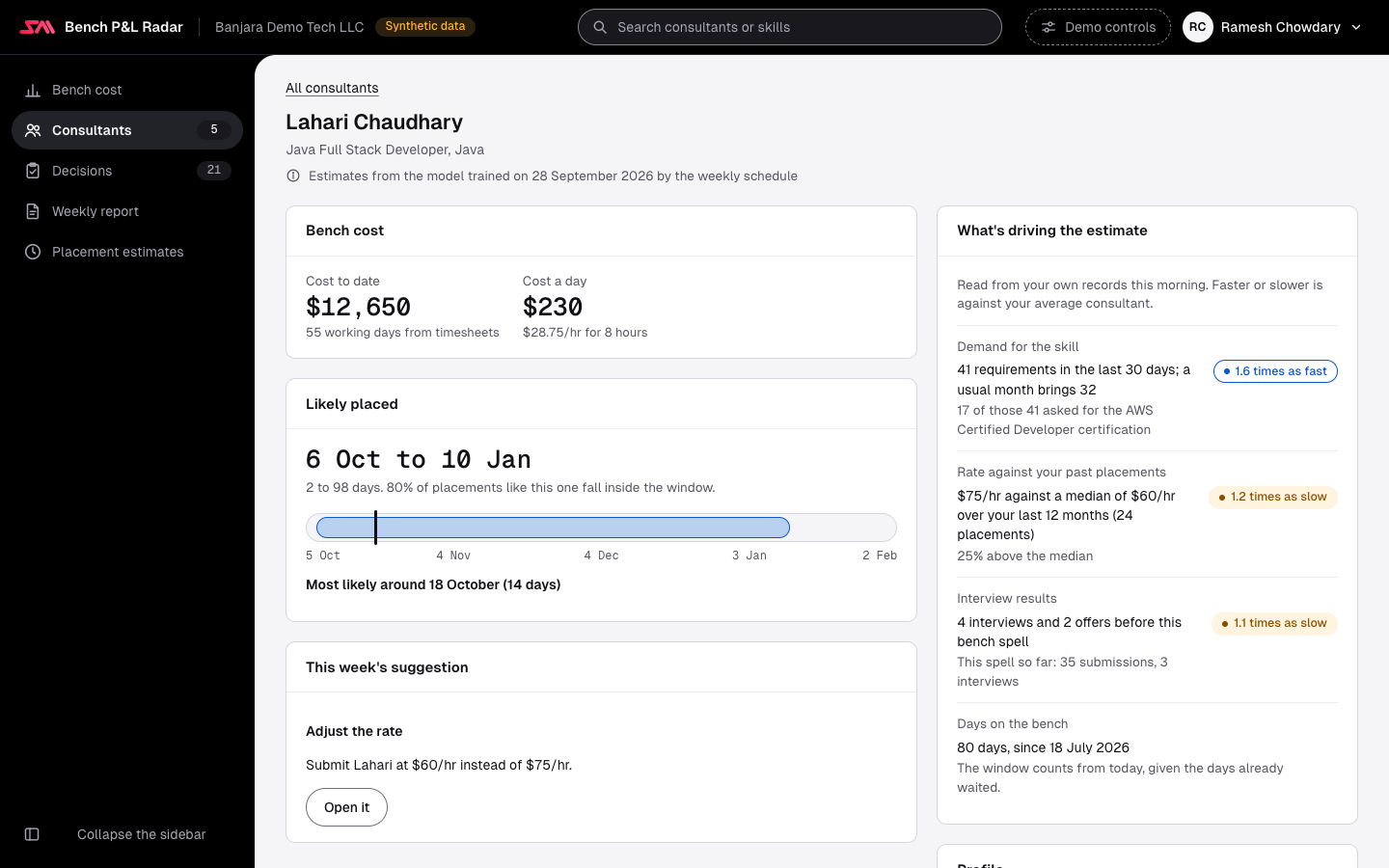 The real screen, on synthetic data
Each suggestion with its facts, and nothing done until the owner decides
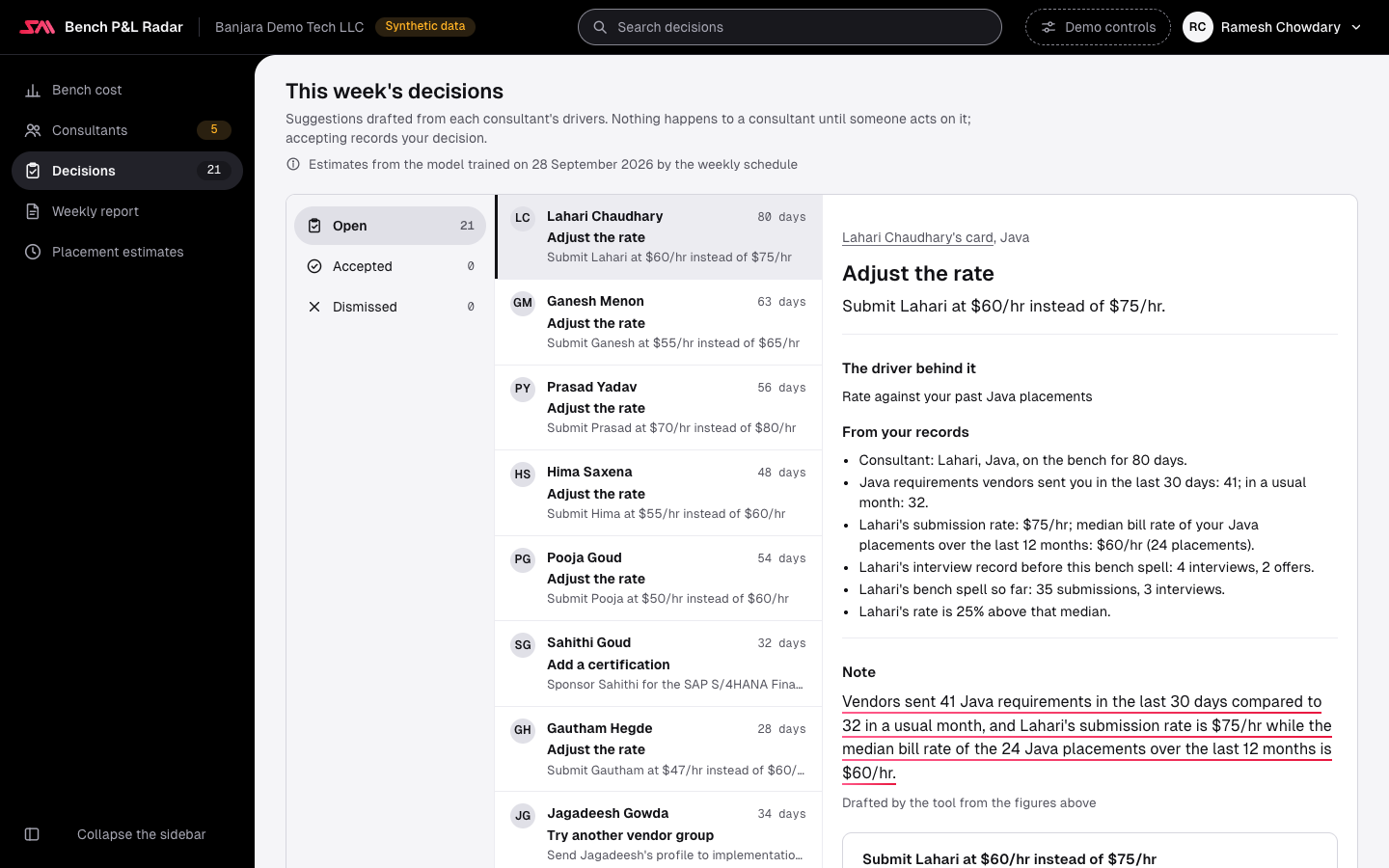 The real screen, on synthetic data
A week of timesheets goes missing: a gap with a note, never a filled line
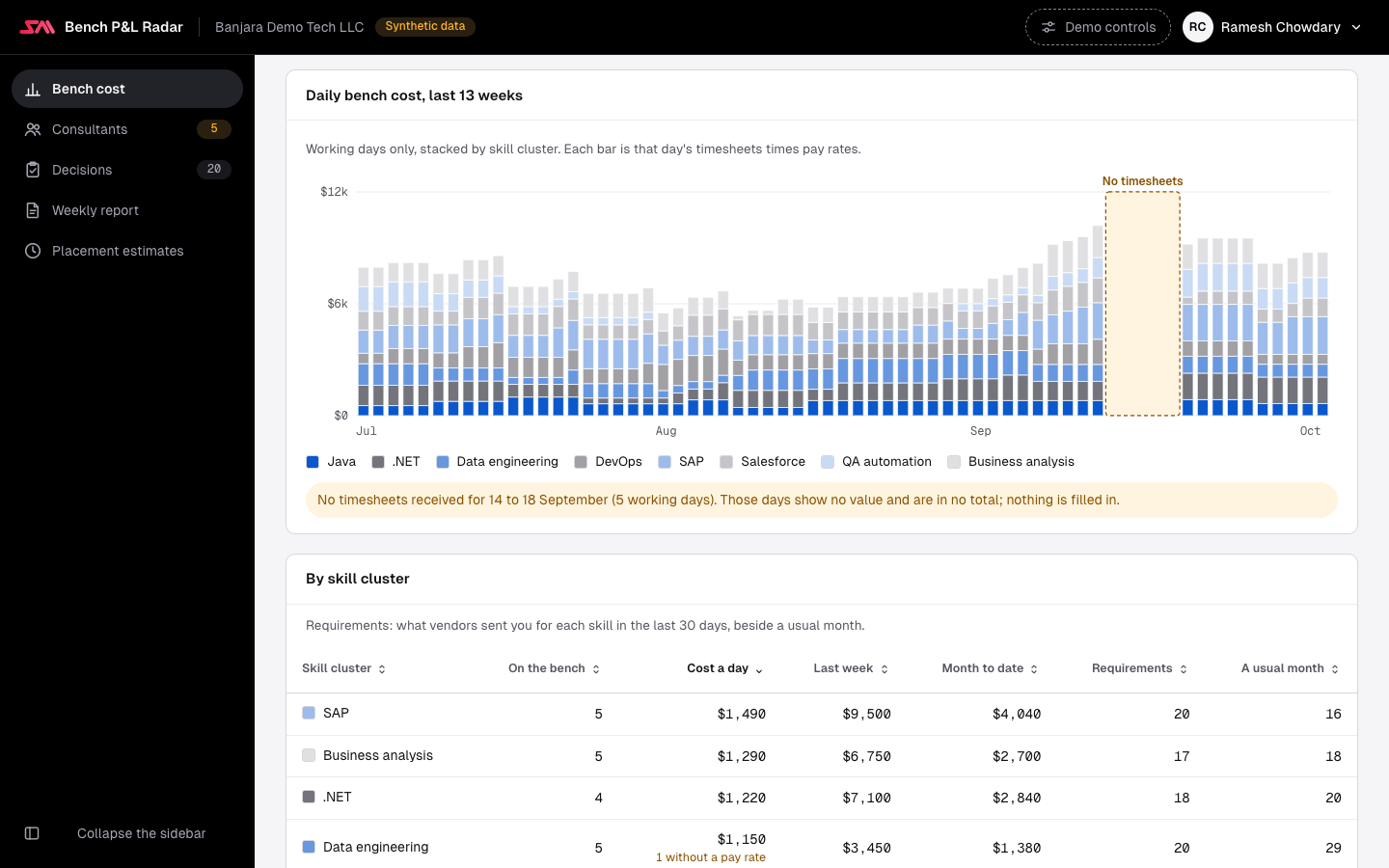 The real screen, on synthetic data
The whole demo as a video, with captions and chapters
Demo built on synthetic data.
1 of 5: Monday morning
The problem
Most owners see bench cost at month end, as one total. By then the consultant who needed a rate change or a new certification has sat for weeks. The signals were in your own submission history all along.
What it does
It adds up the daily cost of every consultant on the bench from pay rates and days idle.
It estimates a placement window for each consultant from your own history of submissions, interviews and placements, and shows how certain that estimate is.
It shows what's driving each estimate — demand for the skill in this month's requirements, where the rate sits against your past placements, interview results.
It drafts a weekly list of decisions for you (adjust a rate, add a certification, try another vendor group) and leaves every one of them to you.
Try to break it
On the call we'll trigger these, live:
- A week of timesheet data is missing. The chart shows the gap instead of filling it in.
- Demand for a skill drops suddenly. Estimates for everyone with that skill are marked less certain.
- A consultant's pay rate isn't recorded. The tool asks for it and doesn't guess.
Where it runs
Any office computer. The estimates come from a small statistical model; a language model only writes the plain-English notes.
Who else does something like this
Bullhorn Reporting & Analytics reports staffing metrics from inside Bullhorn's platform.
Radar is built for the economics of a C2C bench and predicts time to placement from your firm's own history.
The rules it respects
Pay rates never go into a model prompt. Run the notes on a local model and no rate leaves your machines. The tool suggests; you decide.
What our tests measured
How we testThese figures come from test runs on Google's Gemini (gemini-3.5-flash-lite), a hosted model, on synthetic data. We'll add runs on a local model.
- Run on 15 October 2026
- Model: gemini:gemini-3.5-flash-lite
- 528 examples
For your engineers
- Engines
- Gatekeeper, Proof Console
- Sealed mode
- Test passed: with sealed mode on, it refuses every outbound connection except to the model you've approved.
Data flow